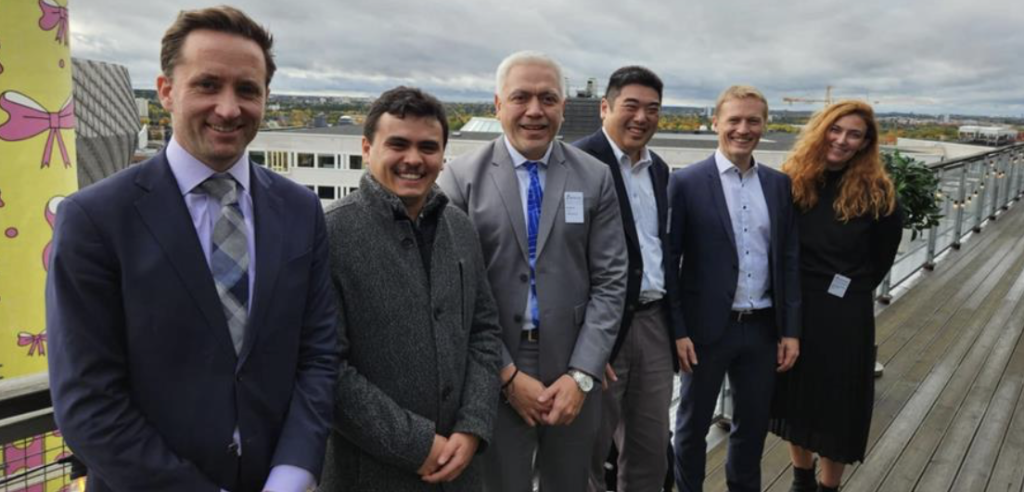


A global summit was recently held in Christchurch, New Zealand, ‘Adaptation Futures 2025’, to accelerating adaptation actions. Halatoa Fua, NES Director, attended the global conference, together with other representatives from the Cook Islands government, academia, and civil society. The summit was organised by the World Adaptation Science Programme (WASP) and University of Canterbury, Te Whare Wananga o Waitaha, in partnership with regional Oceania and international partners.
The theme of Adaptation Futures 2025 included indigenous peoples, oceans, cities and infrastructure, food, water and biodiversity nexus, health and wellbeing for the future generation, climate adaptation, and beyond adaptation.
Halatoa Fua, NES Director, represented the Cook Islands, together with key panellists from Palau, Solomon Islands, Kiribati, and Niue, to present a session on ‘Pacific approaches to Marine Spatial Planning (MSP)’ under the Ocean theme. The presentation was focused on how MSP can maximise local leadership and build resilience to climate change. These five countries are recipient of the project ‘Climate and Biodiversity-Smart Marine Spatial Planning,’ designed to increase collective capacity within these countries to lead tailored approaches to MSP and build resilience to climate change. The project is funded by the New Zealand Ministry of Foreign Affairs & Trade, in partnership with the Secretariat of the Pacific Regional Environment Programme (SPREP) and The Pacific Community (SPC).
All five countries have a different focus on MSP. Palau is developing its national ocean policy, Kiribati is balancing its Phoenix Islands’ economic and conservation priorities, Solomon Islands is implementing provincial-scale climate informed MSP, and Niue is conducting capacity building its communities to manage local marine areas. The Cook Islands is piloting its island-scale MSP with a selected number of islands, while building government and community capacity for MSP.
The five countries have identified many opportunities from this project to better align its ocean laws, strengthen collaboration, identify sustainable financing, capacity building and develop data sharing frameworks. Halatoa Fua stated ‘this is a significant opportunity for the Cook Islands in developing its Marine Spatial Plan under the Marae Moana Act 2017, ensuring that the plan is biodiversity and climate smart, with key indicators developed at the community level. The community will hear more of this work as it progresses in 2026’