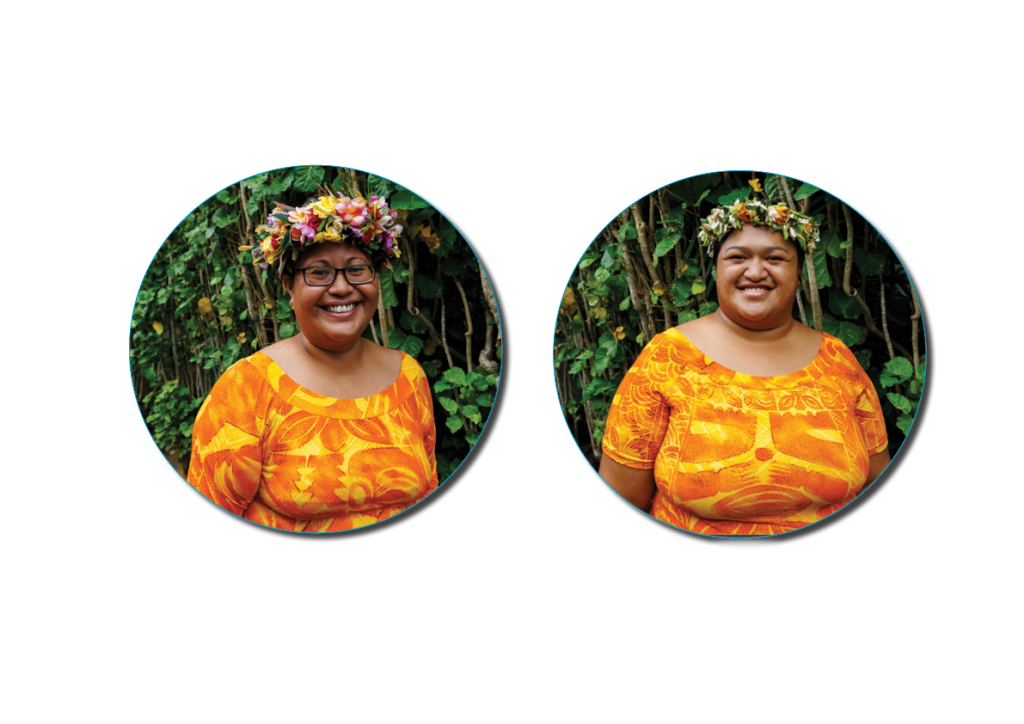


From 8-11 December, a small Cook Islands team travelled to South Seas Islands, Fiji, to take part in a Turtle Monitoring Training Workshop aimed at strengthening national capacity for sea turtle conservation. Representing the Cook Islands were Terena Koteka-Wiki, National Turtle Coordinator and GEF 7 Project ENUA Project Officer at NES; Alanna Smith, Director of the non-governmental organisation Te Ipukarea Society (TIS) and Michael Parrish, Senior Fisheries Officer from MMR.
With support from SPREP, the team attended the four-day workshop led by Shritika Pakash, founder of Ika Bula Consultants, who guided participants through four days of hands-on training. The workshop focused on building practical skills in sea turtle monitoring, from tagging and measuring to genetic sampling and data management, ensuring participants could apply these techniques directly to conservation efforts back home.
The workshop began with mapping exercises to identify turtle nesting beaches in the Cook Islands, feeding areas, and identifying key threats including human consumption and tourism. Although no turtles were observed nesting during the four-day training, the focus on monitoring and hands-on experience was what mattered most. The team gained practical skills in tracking, interpreting turtle activity, and applying monitoring techniques that we can now bring back to the Cook Islands. While Rarotonga doesn’t have active nesting beaches, these skills will inform national approaches to turtle monitoring, including opportunities to support Pa Enua officers with capacity-building in this area.
Practical sessions included tagging, measuring, and recording turtles, as well as genetic sampling. Participants learned how to carefully collect tissue samples, preserve them for analysis, and accurately enter all information into TREDs, the regional turtle database.
The workshop also highlighted the importance of regional collaboration and citizen science. Sharing methods with teams from Fiji and Kiribati reinforced that turtle conservation is most effective when countries work together.
For the Cook Islands, the workshop directly supports national priorities, including the development of the Passages Management Plan, ongoing citizen science initiatives led by Te Ipukarea Society, and marine surveys conducted by MMR. Integrating the skills and knowledge gained during the workshop into these programs will enhance national data collection and strengthen conservation decision-making.
Terena reflected, “This workshop gave us hands-on experience in every aspect of turtle monitoring from understanding threats to carrying out fieldwork, but it’s just the beginning. We need to build on this knowledge, keep improving our methods, and work together as a community to do more for sea turtle conservation across the Cook Islands and the Pacific.”
Through intensive fieldwork, night-time beach patrols, genetic sampling, tagging, and database management, the Cook Islands team returned with enhanced technical skills, strengthened national programs, and a clear pathway for integrating citizen science into long-term monitoring.
With these tools and partnerships, the Cook Islands will be in a better position to lead in turtle conservation, ensuring that our marine species are protected for generations to come.