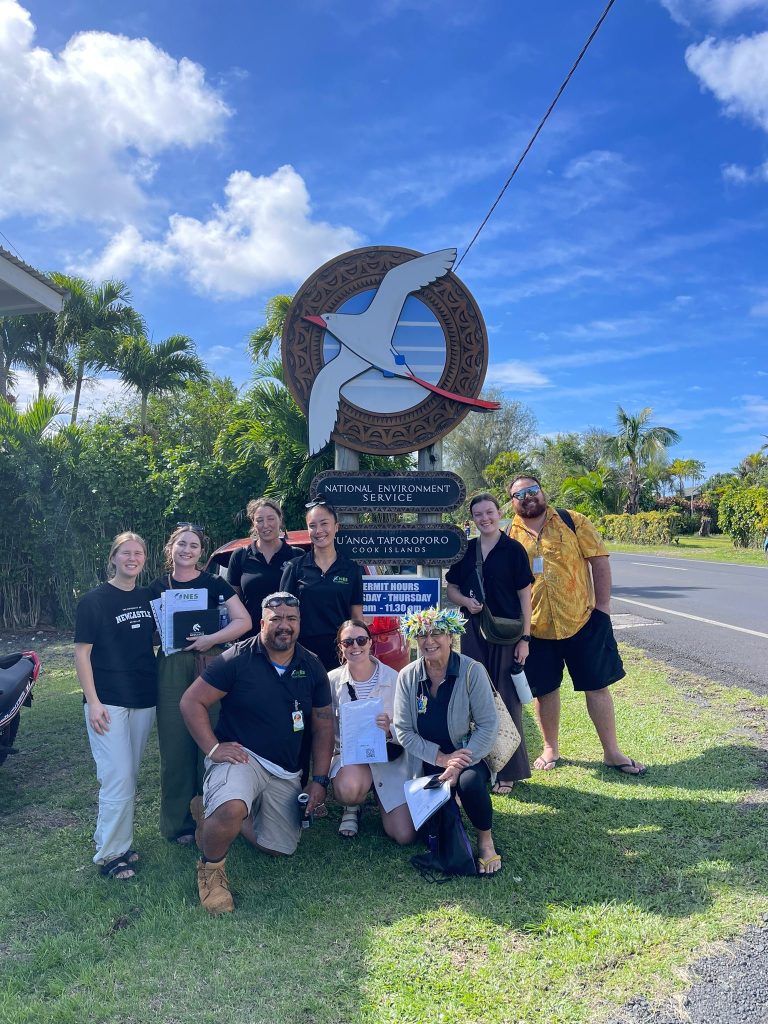


Rarotonga, 17 June 2025 — Pa Enua Environment Staff of Penrhyn and Mitiaro, took part in an educational field trip, focused on identifying invasive species and their impacts on our environment and why they are a problem. The trip was led by the Secretariat of the Pacific Regional Environment Programme (SPREP), in partnership with the Ministry of Agriculture (MOA) and National Environment Service (NES). The field trip visited sites where key invasive species identified under the Restoring Island Resilience (RIR) project will be managed and controlled.
This is part of a wider regional effort led by SPREP under the Pacific Regional Invasive Species Management Support Service (PRISMSS), which supports Pacific Island countries in tackling invasive species, biosecurity strengthening and restoring native habitats to enhance resilience to climate change and improve community livelihoods.
NES Mitiaro Officer, Gretta Murare, stated “It was a full day of outdoor learning, visiting sites around the island, we visited areas where some of these invasive species are located and found that they have grown wildly and increased by a lot more than last visited”. Murare noted that the day-long event provided her with experience in plant species that are threatening native biodiversity. From invasive vines smothering native trees to rats disturbing seabird nesting sites, Murare noted the damage these species can cause. Top of Form
Under the RIR project, invasive weed species that will be targeted in Rarotonga include the Giant reed (Arundo donax) and Dodder (Cuscuta Campestris). These weed species are found at a low distribution and therefore can be more easily eradicated.

These species are not native to the Cook Islands and are known for damaging native ecosystems, harming crops, and competing with local flora. The two Pa Enua Officers also learned how to identify native species that are important for biodiversity and culture, MOA officers explained how native plants support soil health, water quality, and local food systems, while invasive plants can quickly take over and destroy those habitats. The visit highlighted the importance of biosecurity measures, public awareness, and community-led conservation work in maintaining the island’s ecological health.
This experience reinforced the urgent need for responsible environmental stewardship and the critical role of education in combating the spread of invasive species. “As we return from the field, we carry with us a heightened sense of responsibility and a stronger commitment to supporting efforts that preserve Rarotonga’s natural heritage for future generations. As someone who lives in the Pa Enua, we saw the importance of inter-island biosecurity to prevent these weeds from reaching our Pa Enua shores”, expressed Murare.