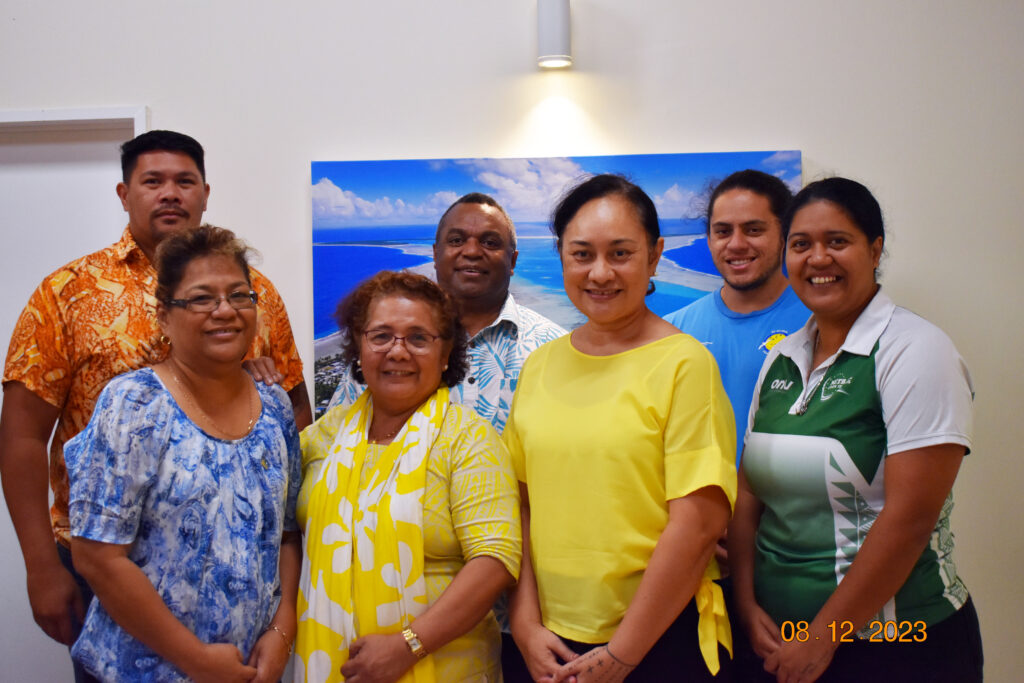


Government technical staff from across multiple agencies recently completed an intensive five-day LiDAR training workshop held from Monday 18 May to Friday 22 May 2026 at Infrastructure Cook Islands (ICI), co-hosted with Climate Change Cook Islands.
The training is part of the ongoing Spatial Data Management and Mainstreaming Project and focused on building national capacity to use Light Detection and Ranging (LiDAR) technology for infrastructure planning, climate resilience, environmental management, disaster response, and land-use analysis.
The National Environment Service (NES) was represented by Senior Environmental Compliance Officer Benjamin Maxwell, who attended alongside technical staff and managers from Infrastructure Cook Islands (ICI), Te Marae Ora (TMO) Public Health, Climate Change Cook Islands, Cook Islands Investment Corporation (CIIC), Ministry of Agriculture (MOA), Emergency Management Cook Islands (EMCI), and To Tatou Vai (TTV).
Throughout the week, participants completed practical, hands-on exercises using national LiDAR datasets and a range of GIS software platforms, including QGIS, ArcGIS Pro, and Global Mapper, with a strong focus on Global Mapper for interpreting and analyzing LiDAR data. Training sessions covered elevation modelling, terrain analysis, point cloud classification, feature extraction, georeferencing, flood analysis, and infrastructure-related applications.
The workshop highlighted the growing importance of LiDAR technology in supporting evidence-based decision-making across government sectors. LiDAR data has significant applications for flood and erosion modelling, infrastructure and asset management, vegetation mapping, watershed analysis, and disaster risk reduction.
For the National Environment Service, the training also reinforced the importance of using advanced spatial technologies to support wetlands protection, coastal management, and sustainable environmental planning. LiDAR datasets can help identify vulnerable low-lying areas, monitor changes in wetland ecosystems, improve flood risk assessments, and strengthen environmental impact assessments for future development projects.
Participants also explored how LiDAR and drone-generated point cloud data can support long-term environmental monitoring and better decision-making through accurate terrain analysis and improved spatial data integration. The training emphasised practical workflows and real-world applications tailored specifically to national priorities and local datasets.
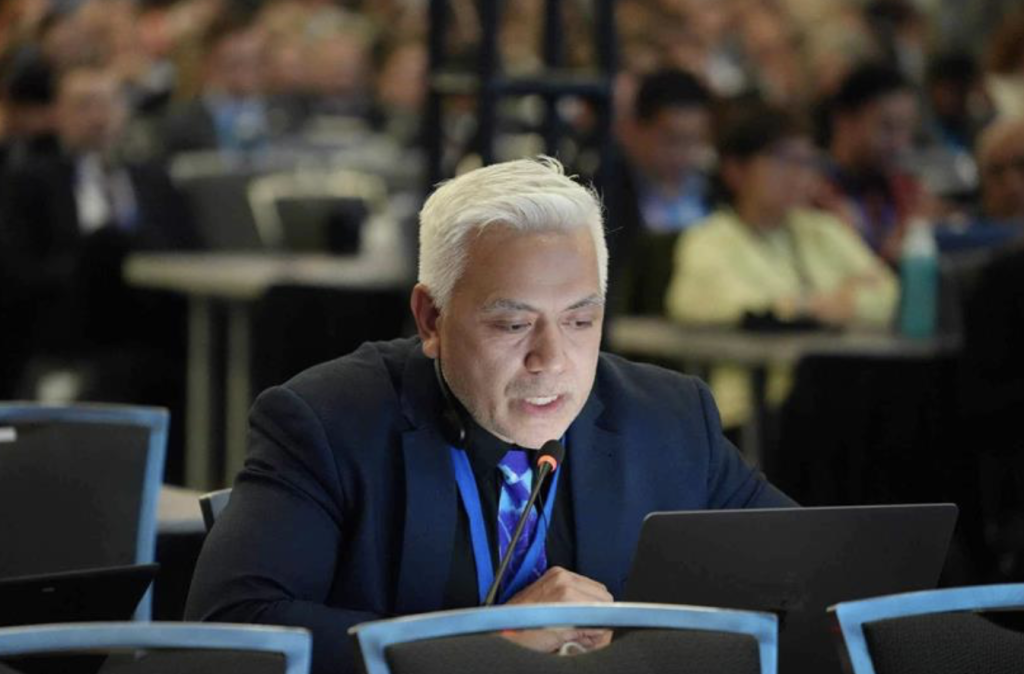
Benjamin Maxwell said the training provided valuable technical knowledge that will support NES environmental assessment and compliance work, particularly in areas relating to wetlands protection, cloud forest, infrastructure development, hazard mapping, and environmental monitoring.
“The training demonstrated how LiDAR technology can strengthen decision-making through accurate terrain and spatial analysis. It was especially valuable to see how different agencies can collaborate and apply the same datasets across multiple sectors to support climate resilience and environmental protection,”
The workshop concluded with a final review session and presentation of certificates to participants. Organisers noted that the training represents an important step toward strengthening national geospatial capability and enhancing the Cook Islands Government’s ability to apply advanced spatial technologies in climate resilience, environmental protection, and sustainable development initiatives.