

Images: Secretariat of the Pacific Regional Environment Programme – SPREP
The Cook Islands is participating in the Second Informal In-Person Meeting of Heads of Delegation to the Intergovernmental Negotiating Committee on Plastic Pollution, being held at the United Nations Conference Centre in Bangkok, Thailand, from 27 to 30 September 2026. Regional consultations were held on 26 September ahead of the formal meeting.
The Cook Islands delegation comprises Halatoa Fua, Director of the National Environment Service (NES) and Head of Delegation; Sandrina Thondoo, Director of the Treaties, Multilaterals and Oceans Division at the Ministry of Foreign Affairs and Immigration (MFAI); Tekura Moeka’a, Manager of Environmental Policy and Planning at NES; and Gerry Nagtzaam of Monash University as Technical Adviser.
The Bangkok meeting is part of the informal process leading to INC-5.4 and is focused on identifying possible landing zones on the remaining issues in the future legally binding instrument on plastic pollution. The Cook Islands is working closely with Pacific Small Island Developing States (PSIDS), the Alliance of Small Island States (AOSIS), the Asia-Pacific Group and other negotiating partners throughout the meeting.
On the first day of regional consultations, Pacific countries refined their positions across the treaty, including plastic products, product design, waste management, national action plans, effectiveness evaluation and means of implementation. The Cook Islands continued its coordination role on Plastic Products, where a central Pacific concern is that small import-dependent markets cannot address problematic products through domestic measures alone.
Head of Delegation Halatoa Fua said: “For Pacific SIDS, the treaty needs to work in the real world. We import products designed and manufactured elsewhere, but we often inherit the cost of managing them at the end of their life. That is why effective global measures, practical national implementation and accessible support need to work together.”
Regional discussions also examined possible approaches to the treaty’s scope, a proposed AOSIS progress mechanism linking National Action Plans, reporting and effectiveness evaluation, and an Arab Group proposal centred on a global plastic-waste recovery trajectory and nationally determined recovery contributions. These ideas will continue to be tested during the formal Heads of Delegation discussions.
The Cook Islands has emphasised that waste prevention and reduction should remain central to the treaty, supported by sustainable product design, effective waste management and a clear waste hierarchy. The delegation is also seeking strong links between treaty obligations and the finance, capacity building and technology transfer needed by Small Island Developing States to implement them.

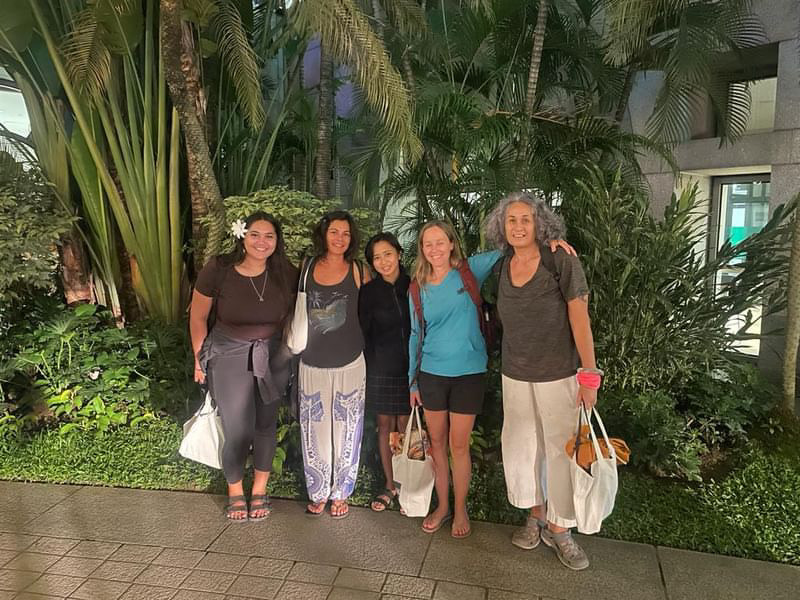
From left: Halatoa Fua (NES), Sandrina Thondoo (MFAI) and Tekura Moeka’a (NES) during informal Heads of Delegation consultations on the global plastics treaty. Photo: SPREP.
Sandrina Thondoo, Director of the Treaties, Multilaterals and Oceans Division at MFAI, said the Bangkok meeting provides an important opportunity to narrow differences before the next negotiating text is prepared.
“The Pacific continues to engage constructively across negotiating groups. Our focus is on solutions that are legally workable, environmentally effective and implementable for Small Island Developing States, while ensuring that national circumstances and access to means of implementation are properly reflected.”
The INC Chair has indicated that the Bangkok discussions will inform the next iteration of the negotiating text, expected in early November 2026, with a further Heads of Delegation meeting anticipated in January 2027. The Cook Islands delegation will continue working with Pacific and international partners throughout the Bangkok meeting and will assess the final outcomes once discussions conclude.