
Seventh Pacific Invasive Learning Network strengthens regional action in Palau
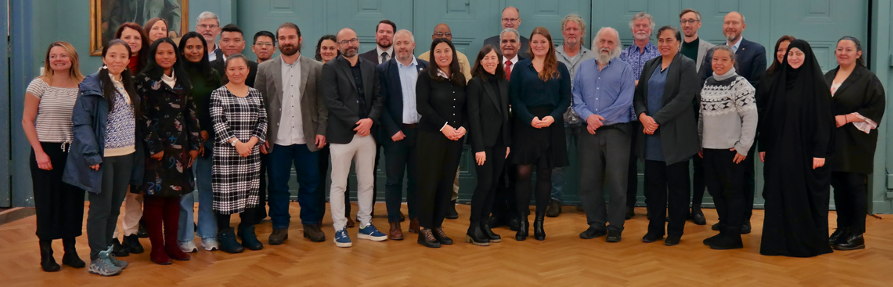
A key outcome of the meeting was renewed commitment to deeper regional collaboration.
The Rarotonga Environment Act 1994/95 was repealed by the Environment Act 2003 formalising the establishment of the NES.
The role of the National Environment Services is based on 5 main areas and has four main departments.
There is a suite of policies, strategies and plans developed over the years to enable environmental protection, conservation and management.
Our cultural identify is deeply rooted in our environment and it is part of our heritage and legacy.
An Environment Consent is a permission granted to an applicant undertaking an activity that has some but not significant environment impact.
A permission required for the construction of a standard residential dwelling or non-construction purposes such as land clearance.
A management tool used to identify the environmental, social and economic impacts of a project prior to decision making.
Any person planning to take any wild animal or plant overseas must apply for a permit for trade movement of endangered species (CITES).
All importers of bulk HFC goods must register as an approved importer with NES.
Other permits issued by NES relates to the transboundary movement of waste, ozone depletion substances and wildlife.
Biodiversity plans are important documents to manage and determine the state of our natural environment.
Protecting species, habitats, ecosystem, and protecting biological diversity.
Activities to protect, maintain, or restore the quality of environmental media.
Historical milestone for conservation in the Cook Islands
The Environment Act 2003 is the primary legislation applied throughout the Cook Islands and the Outer Islands (Pa Enua) of Aitutaki, Atiu, Mauke and Mitiaro.
Several subsidiary legislations made under the Environment Act 2003 to apply provisions of the Act and to also include the Pa Enua.
Numerous national legislations interlinked with the environment but administered by other government entities.

A key outcome of the meeting was renewed commitment to deeper regional collaboration.

Three NES staff recently participated in the Cook Islands Youth and Women’s Parliament Programmes, gaining firsthand experience in parliamentary processes, national policy discussions, and leadership

Government technical staff recently completed a five-day LiDAR training workshop, building skills in drone mapping, GIS, and environmental monitoring to support climate resilience and informed

The National Action Plan will provide a coordinated national framework to help reduce plastic pollution across the Cook Islands through practical, realistic, and achievable actions.

The next steps involve collating all feedback received during the consultations and preparing a draft IEMP. This draft will then be shared back with the

Over a three-week audit period, the NES office generated 41.43kg of waste

From national coordination to island realities, reflecting on progress and strengthening how we care for our land, forests, and communities.

The proposal is for a new elevated shopping mall with several retail units, covered walkways, a shared toilet block, ground-level/under-building parking and on-site parking. The

The workshop aimed at supporting countries in their preparation for the implementation of the BBNJ Agreement, particularly to provide a deeper understanding of the scientific

A key discussion was the need for global reporting systems to better reflect small island realities.